|
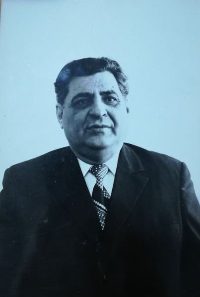
Mykhailo Avdalian (Megerdych Myrkunovych)
(14 January 1921 – 01 March 1989)
|
Mykhailo Avdalian was a Senior Lecturer in the Department of Geography, local historian.
Mykhailo Avdalian was born in Mykolaiv. In 1941, he graduated from the Kherson State Pedagogical Institute named after N.K. Krupska. During World War II, he participated in combat operations as part of the Serheiev partisan detachment in the Lower Dnieper floodlands. Mykhailo Avdalian served in the army until the victory was achieved. He was awarded the Medal "For the Victory over Germany."
|
|

Oleksii Aleksieiev
(14 March 1924 – 01 September 2004)
|
Oleksii Aleksieiev was a law lecturer, a retired Lieutenant Colonel, and an Honorary Lecturer at Kherson State University. On 16 February 1942, he was called up for military service. He was a commander of a 122-mm howitzer in the 891st Artillery Regiment of the 332nd Rifle Division of the 4th Shock Army of the Kalinin Front. His service culminated in the decisive battle for Berlin, where he commanded the 1st Firing Platoon. Among his numerous awards are two Orders of the Patriotic War (2nd Class), the Order of Bohdan Khmelnytsky, 18 medals, and a commendation from the Supreme Commander-in-Chief for the storming and capture of Berlin.
|
|

Oleksandr Alifanov
(26 September 1916 – 12 July 2005)
|
Oleksandr Alifanov was a Candidate of Geological and Mineralogical Sciences, Associate Professor of the Department of Geography, and Honorary Lecturer of Kherson State University. He was born in the stanytsia of Volodymyrivska, Krasnodar Krai. In 1938, after graduating from the Rostov Industrial Workers' Faculty, he enrolled at the Faculty of Geology of the Rostov-on-Don State University. In 194,2 he earned a degree in Geology and a qualification of Category II researcher in the field of geology and a lecturer at higher education institutions. From 1943, Oleksandr Alifanov served in the 42nd Regiment of the 10th Division of the 4th Kuban Guards Cavalry Corps. He was awarded the Order of the "Patriotic War," 2nd Class, and five medals. After demobilisation, he worked as a Chief Geologist on the restoration and construction of mines in Shakhty and Luhansk. He made a discovery that served as the foundation for new mine development, for which he earned the honorary title and the Excellence in the Coal Industry of the USSR badge.
|
|

Yurii Artamonov
(03 November 1925 – 03 April 1997)
|
Yurii Artamonov was a senior lecturer in the Department of Mathematical Analysis, Honorary Lecturer at Kharkiv State University. He was born in Barnaul, in the Altai Krai. During World War II, Yurii moved with his parents to Odesa, where he studied at the Naval College. He was a combatant, serving initially in the Stalin Partisan Detachment and later as a sapper in the 295th Rifle Division of the 2nd Ukrainian Front. After the war, Yurii Artamonov continued his military service until June 1950. He was awarded the Orders of the "Great Patriotic War," 1st and 2nd Class, the Order "For Courage," and numerous medals. |
|
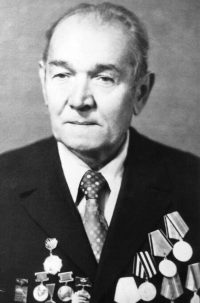
Mykola Bilyi
(22 November 1909 – 24 May 1988)
|
Mykola Bilyi was a Candidate of Pedagogical Sciences, a professor, Head of the Department of Physics, and Dean of the Faculty of Physics and Mathematics (1955–1968), Excellence in Public Education of the Ukrainian SSR awardee and a graduate of the Kherson State Pedagogical Institute (KSPI). He was born in the village of Mala Tokmachka, Orikhiv district, Zaporizhzhia region. In 1937, Mykola Bilyi graduated from the Faculty of Physics and Mathematics of the KSPI, qualifying as a physics teacher. After graduating, he worked at his alma mater as an Assistant and Lecturer of Physics and Physics Teaching Methodology. He served in the Second World War and was awarded six medals for battle merit. From 1946 until the end of his life, he worked at the Kherson State Pedagogical Institute. |
|
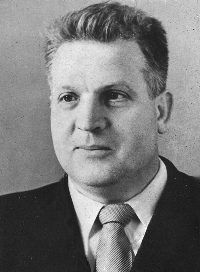
Pavlo Bohdanov
(28 December 1914 – 09 October 1975)
|
Pavlo Bohdanov was the Rector of the Kherson State Pedagogical Institute named after N.K. Krupska (1965-1975), Candidate of Historical Sciences, and Associate Professor. He was born in the village of Seleznivka, Luhansk region, into a miner's family. He graduated from the Luhansk Pedagogical College and the Faculty of History of the Luhansk Pedagogical Institute. He worked in the Komsomol and the Communist Party. With the onset of World War II, Pavlo Bohdanov, as propaganda secretary of the Luhansk Regional Committee of the Leninist Communist League of Youth of Ukraine (also known as Komsomol, LCLYU), actively participated in the formation of youth combat units and militia detachments. He was also involved in the recruitment, training, and deployment of youth to operate behind enemy lines and established an underground Komsomol resistance network. In 1942, Pavlo was appointed instructor of the special department responsible for directing underground operations and the partisan movement. A year later, as an experienced Komsomol official, he was appointed First Secretary of the Poltava and later the Chernihiv Regional Committees of the LCLYU. For his active work in organising the youth underground and the partisan movement, as well as his efforts in post-war reconstruction, Pavlo Bohdanov was awarded the Order of the Red Star, the Order of the Badge of Honour, and the Medal Partisan of the Patriotic War, 1st Class.
|
|
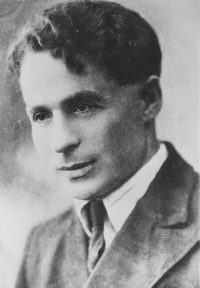
Semen Volovnyk
(1911 – ?)
|
In 1935, Semen Volovnyk graduated from the Faculty of Physics and Mathematics at Odessa University. He worked as a lecturer in mathematical analysis at the Kherson State Pedagogical Institute. He was killed in action at Stalingrad.
|
|
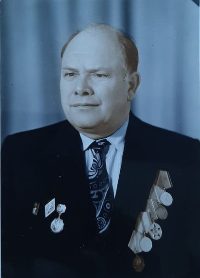
Fedir Drozdov
(18 March 1922 – 30 April 1997)
|
Fedir Drozdo,v a senior lecturer of the Department of Physics Methodology and General Technical Disciplines, Laboratory Technician of the Department of Labour Training at the Faculty of General Technology of the Kherson State Pedagogical Institute (KSPI). In 1950 graduated from the KSPI. From 1940 to 1942, Fedir Drozdov served as a mortarman in the 6th Automobile Regiment of the 54th Tank Brigade. He participated in the Iranian campaign to maintain state order, as well as on the fronts of World War II. He was wounded three times. Fedir Drozdov was held in a German concentration camp in Stalino, from which he escaped in 1942. He lived in the occupied territory at the "Rekonstruktsiia" (Reconstruction) state-owned farm in the Mykolaiv Region, where he worked as a general labourer until its deoccupation. From 194,4 Fedir Drozdov served as a mortar squad commander, participating in combat operations in Bulgaria and Hungary. For his combat merits, he was awarded the Patriotic War Order and eight military medals. |
|
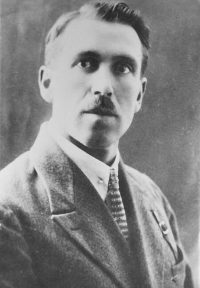
Yevhen Yehorov
(1900 – ?)
|
In 19,33 Yevhen Yehorov graduated from the Agrobiological Department of the Kherson Institute of Social Education. He served as a lecturer at the Department of Zoology and as Deputy Director for Correspondence Studies at the Kherson State Pedagogical Institute. In June 1944, he was reported as missing in action. |
|
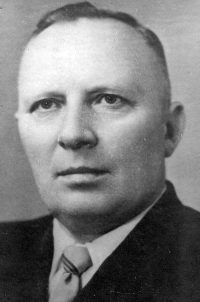
Havrylo Katrenko
(28 August 1908 – 28 June 1979)
|
Havrylo Katrenko was a Director of the Kherson State Pedagogical Institute named after N.K. Krupska (1950-1959), Head of the Department of Pedagogy and Psychology (1962-1972), and Associate Professor in the Department of Pedagogy and Psychology (1972-1976). He was born in the village of Lyman Druhyi, Reshetylivka district, Poltava Region. In 1940, he graduated from the School Faculty of the Leningrad Pedagogical Institute of Communist Education named after Krupska. From 1940 to 1941, he served as Director of the Derman Pedagogical College in the Rivne Кegion. From October 1941 to 1945, Havrylo Prokopovych served on the front lines of World War II. In 1941-1942, he served as an Adjutant and Assistant Chief of Staff of the 1640th Sapper Battalion of the Sapper Brigade; in 1942–1943 - Assistant Chief of Staff, Chief of Food Supply of the 4th Mountain Mine-Engineering Battalion of the 1st Mountain Mine-Engineering Sapper Brigade, 9th Army; in 1943-1945 - Deputy Commander, Chief of Intendant Supply of the 94th Separate Assault Engineering-Sapper Battalion of the 19th Assault Engineering-Sapper Dvinsk Brigade, Reserve of the Supreme High Command. Havrylo Katrenko took part in the battles for the liberation of Ukraine and the North Caucasus, the Kuban and the Baltic States. He was wounded twice and sustained one severe concussion. His military ranks were Senior Lieutenant of the Administrative Service and Captain of the Intendant Service. Havrylo Katrenko was awarded the Order of the Red Star, the Order of the Patriotic War, 2nd Class, and the medals For Combat Merit, For the Defence of the Caucasus, and For the Victory over Germany. |
|
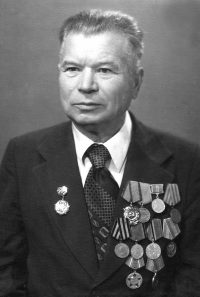
Fedir Kiver
(16 February 1919 – 26 November 1986)
|
Fedir Kiver was the Head of the Department of Foundations of Agricultural Production, a Doctor of Agricultural Sciences, and Professor. He was born into a peasant family in the village of Mykolaivka in the Berdyansk district, Zaporizhzhia Region. From 1936 to 1938, he studied at the Leningrad Hydrographic Institute. From 1938 to 1940, he was a cadet at the school for aviation mechanics. In 1939, upon the outbreak of the war with Finland, Fedir Kiver was conscripted and deployed to the front as a flight mechanic in an aviation regiment. During combat operations, he was severely wounded. For his service, he was decorated with the Order of the Patriotic War, the Order of the Red Banner of Labour, and medals for Combat Merit and For the Victory over Germany. |
|
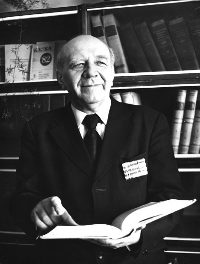
Viktor Kovalov
(28 January 1920 – 16 September 2002)
|
Viktor Kovalov was the Head of the Department of Russian Language, Dean of the Faculty of Philology, Doctor of Philological Sciences, Professor, Honoured Worker of Higher Education of Ukraine, and Honorary Citizen of Kherson. He was born in Yalta. In 194,2 while in evacuation in Maykop, he graduated from Odesa University and the Krasnodar Mortar-Artillery School, where he was promoted to the rank of Senior Sergeant. From 1942, he served as a platoon commander. Viktor Kovalov took part in the Battle of Stalingrad, after which he was promoted to senior lieutenant. He fought at the Battle of Kursk and in the cities of Orel, Bryansk, Velyki Luky, Vyazma, and others. His service continued in Belarus, Karelia, Vyborg, and the Baltic states, followed by combat for the fortress of Königsberg, the Oder River, and Szczecin. From 1944, Viktor Pavlovych served as the Commander of an Artillery Battalion with the rank of Captain. His division took part in military operations in Poland and Germany. For Viktor Kovaly, the war ended in East Prussia.
For his combat merits, Viktor Pavlovych was decorated with prestigious honours, including the Order of the Red Banner, the Order of the Red Star, and multiple Orders of the Patriotic War (1st and 2nd Class).
|
|
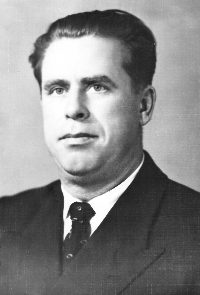
Oleksandr Kuznetsov
(25 August 1914 – 15 July 1981)
|
Oleksandr Kuznetsov was a Director of the Kherson State Pedagogical Institute named after N.K. Krupska (1959-1962), Candidate of Economic Sciences, Head of the Department of Marxism-Leninism (1966–1968), and Associate Professor of the Department of Political Economy and Philosophy (1968–1977).
Oleksandr Kuznetsov was born in the village of Rudnikovo, Kitsmansko-Horodotskyi district, Volgograd region. After graduating from a pedagogical college, he worked as a deputy director of academic affairs at a school in the Arkhangelsk region and pursued correspondence studies at the Faculty of Russian Philology of the Vologda Teachers' Institute. During World War II, he served in the headquarters of the 69th Army of the 1st Belorussian Front. Oleksandr participated in the liberation of Poland and Germany. In 1945, he was awarded the Order of the Patriotic War, 2nd Class. In March 1946, Senior Lieutenant Oleksandr Kuznetsov concluded his military service.
|
|
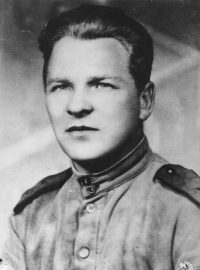
Oleksandr Kulikov
|
Oleksandr Kulikov was an alumnus of the Kherson Institute of Social Education and a lecturer in the history of the Communist Party of the Soviet Union (CPSU). He was killed in action. |
|
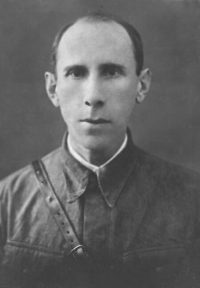
Ilia Levinson
(1902 – ?)
|
In 1933 Ilia Levinson graduated from the Kherson Institute of Social Education. He was a lecturer in mathematics and astronomy and served as acting head of administrative affairs at the Kherson State Pedagogical Institute. In 1940 he was Dean of the Faculty of Physics and Mathematics. |
|
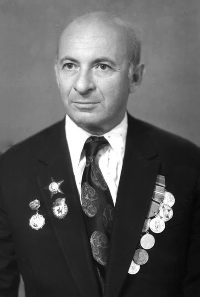
Rem Lukatskyi
(01 April 1925 – 2008)
|
Rem Lukatskyi was a Candidate Biological Sciences, Associate Professor, and Head of the Department of Anatomy and Physiology of Humans and Animals.
Rem Lukatskyi was born in Ananiiv in Odesa Region. During World War II, he attended a school for young soldiers in Tashkent, where he trained as an artilleryman. He was subsequently transferred to a flight school in the Ural (Cheliabinsk), and later trained as a paramedic (medical assistant) at the Kharkiv Military Medical College. In 1944 he was deployed to the front lines near Olomouc, Czech Republic, where he provided essential care in a medical unit. Rem Lukatskyi was awarded the Order of the Red Star and numerous medals for his combat merit.
|
|

Borys Makosevskyi
(06 July 1920 – ?)
|
Borys Makosevskyi was a senior lecturer of the Department of Physics, Honorary Lecturer of Kherson State University, and a 1951 alumnus of the Kherson State Pedagogical Institute. He was born in Vitebsk, Byelorussian SSR. In 1939, he enrolled in the Faculty of Physics and Mathematics at Rostov University. In 1940, while in his second year, he was drafted for military service. From 1940 to 1946, Borys Makosevskyi served as a Senior Sergeant and Senior Calculator for military unit 06184. He participated in combat operations in Manchuria. Borys Makosevskyi was awarded the Order of the Patriotic War (2nd Class), and the medals For Courage, For Combat Merit, and For the Victory over Japan.
|
|
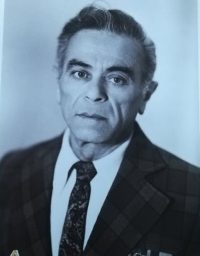
Borys Malinskyi
(13 December 1925 – 16 January 1995)
|
Borys Malinskyi was a Candidate of Technical Sciences, Senior Lecturer of the Department of Physics, and a 1956 graduate of the Kherson State Pedagogical Institute. He was born in the village of Kalininske (now known as Kalynivske) in Velyka Oleksandrivka District, Kherson Region. In 1943, he graduated from the School of Aerial Gunners-Radio Operators at the Military Aviation School for Reconnaissance and was assigned to the 15th Separate Reconnaissance Aviation Regiment as an aerial gunner-radio operator. He participated in the liberation of the Baltic states and Poland, where he concluded his military service. Boris Yosypovych Malinsky was awarded the Order of the Red Star, the ‘For Valour’ and ‘For Victory over Germany’ medals for his combat merits. |
|
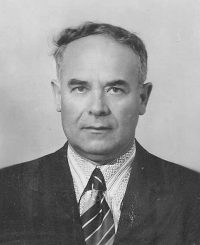
Oleksandr Mashtaliarchuk (20 June 1921 – ?) |
Oleksandr Mashtaliarchuk was a lecturer of Civil Defense, Chief of Staff of Civil Defense, and Lieutenant Colonel (Reserve). He was born into a peasant family in the village of Teklivka, Kryzhopil District, Vinnytsia Region. In 1941, Oleksandr Mashtaliarchuk graduated early from the Krasnodar Infantry School. He was appointed platoon commander in an infantry regiment, which participated in combat operations on the Southwestern Front. He was wounded twice. Following his recovery, Oleksandr Mashtaliarchuk served as a battery commander in an infantry brigade and participated in the defense of the Caucasus. In 1943, the brigade was transferred to the 4th Ukrainian Front, which liberated the Donbas region. Until the end of the war, he served as a battalion commander, participating in combat operations on the Baltic Front. After the war, he served as an Assistant Chief of Staff in an artillery regiment. For his combat merits, Oleksandr Mashtalyarchuk was awarded two Orders of the Red Star, the Order of the Patriotic War (1st Class) and the medals ‘For Combat Merit’, ‘For the Defence of the Caucasus’, ‘For Victory over Germany’ and others.
|
|
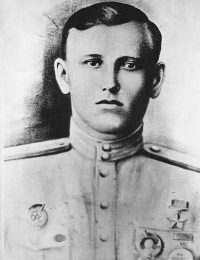
Mykhailo Moskalenko
(8 November 1919 – 26 September 1943)
|
Mykhailo Moskalenko was a third-year student at the Faculty of Physics and Mathematics of the Kherson State Pedagogical Institute named after N.K. Krupska, Hero of the Soviet Union. He was born in the village of Vilne Zaporizhzhia, in the Mykolaiv Region. In Novyi Buh, he graduated with honors from Secondary School No. 6, which now bears his name. He was passionate about physics and entered the Kherson State Pedagogical Institute, where he was also an active participant in amateur art activities Mykhailo voluntarily applied to the military recruitment office and was sent to the Krasnodar Officer Training School, from which he graduated in March 1942. He was commissioned as a Lieutenant and, as a top graduate, was assigned as a fire platoon commander in an independent guards battalion of 120mm mortars, 9th Guards Rifle Brigade of the North Caucasus Front. Mykhailo Moskalenko participated in battles northeast of Tuapse and for the stanitsas of Smolenska and Krymska. He received his first combat award, the medal "For Courage," for the liberation of the Caucasus. As a fire platoon commander of the 309th Guards Rifle Regiment, 109th Guards Rifle Division of the 4th Ukrainian Front, Guards Lieutenant Mykhailo Moskalenko distinguished himself on September 26, 1943, during the breakthrough of the enemy’s heavily fortified defense near the village of Zelenyi Hai. While supporting the infantry advance, his platoon fired upon the enemy. When the Nazis launched a counterattack with significant forces supported by tanks, Lieutenant Moskalenko, despite being severely wounded, did not abandon his position until the last shell was fired. He is buried in a mass grave in the village of Zelenyi Hai in Tokmak District, Zaporizhzhia Region. By a decree of the Presidium of the Supreme Soviet of the USSR dated 1 November 1943, Lieutenant Mykhailo Moskalenko was posthumously awarded the title of Hero of the Soviet Union for ‘the heroic feat displayed whilst carrying out combat missions assigned by the command to break through a heavily fortified German line and liberate Melitopol’. He was also decorated with the Order of Lenin (01 November 1943) and the For Courage medal (21 May 1943). |
|
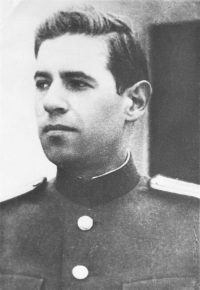
Oleksandr Nasinnik
(1907 – 1945)
|
In 1932 Oleksandr Nasinnik graduated from the Kherson Institute of Social Education. From 1939, he worked as a senior lecturer in the Department of Ukrainian Literature and temporarily acted as Head of the Department at the Kherson State Pedagogical Institute. He died in Hungary in 1945.
|
|
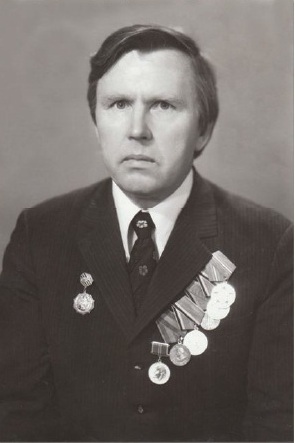
Mykola Novikov
(July 29, 1927 – March 11, 2012)
|
Mykola Novikov was a Candidate of Philosophical Sciences (PhD equivalent), Associate Professor of the Department of Philosophy, a participant in the Second World War, an Honorary Lecturer of Kherson State University, and a Veteran of Labor.
Mykola Novikov was born in the village of Mykolaivka, Platonivskyi District, Tambov Oblast, into a large family of collective farmers.
At the beginning of the Second World War, his elder brothers went to the front, where they were killed in action. In 1944, Mykola Novikov was drafted into the military and took part in the Soviet–Japanese War. After the victory, he continued his military service in a radio intelligence unit. In 1950, he was demobilized due to health reasons.
For his military service, Mykola Novikov received 18 state awards, including the Order of Courage, the Medal "For the Victory over Japan," and other decorations.
In 1951, he completed the first year of the Ivanovo Military-Political School and was subsequently transferred to the Higher Infantry School in Moscow.
In 1963, Mykola Novikov moved to Kherson. From 1964 to 2005, he worked at the Department of Philosophy and Political Economy, and later the Department of Philosophy, serving as a lecturer, senior lecturer and associate professor. In 1978, he defended his Candidate of Sciences dissertation. Although he officially retired in 2000, he continued his academic work.
Mykola Novikov was a member of the Kherson State University Veterans' Council, where he regularly met with students and shared his wartime experiences.
|
|

Anastasia Omutnykh
(24 May 1924 – 10 October 2013)
|
Anastasia Omutnykh was a dormitory warden, honorary employee of Kherson State University. She was born in the Omsk region and completed seven years of schooling. In December 1943, she voluntarily enlisted and joined the 30th Separate Signal Battalion, where she served as a senior telephone operator. Anastasia Omutnykh participated in combat operations across the territories of Ukraine, Russia, and Estonia. She was wounded in action, but after receiving treatment, she returned to the front lines. Anastasia was awarded the Order of the Patriotic War (2nd Class), the Order ‘For Courage’ and numerous medals. |
|

Pavlo Paraskevych
(30 June 1921 – 20 March 2022)
|
Pavlo Paraskevych was a Candidate of Philological Sciences, Associate Professor, Head of the Department of Ukrainian Literature (1977–1988), Excellence in Education of the Ukrainian SSR, Honorary Professor of Kherson State University, and Honorary Citizen of Kherson. He was born in into a peasant family in the village of Lapkivtsi, Chornoostrivskyi district, Khmelnytskyi region. After finishing school, Pavlo Paraskevych continued his studies at the Odesa Mechanical-Technological College. After his second year, he enrolled in the Podilsk Artillery School and dedicated his life to the military. He served in an anti-aircraft artillery regiment of the 1st Ukrainian Front. He participated in the liberation of Western Ukraine, Transcarpathia, Poland, Slovakia, and the Czech Republic. Pavlo Paraskevych was awarded the Order of the Patriotic War (2nd Class), the For Courage Order, and numerous medals, including For the Victory over Germany, and many others.
|